How to Reclaim Confidence from Imposter Syndrome (Even When You’ve Earned Your Place)
In 2019, Michelle Obama shared her perspective on imposter syndrome—and how it followed her through every major milestone, even as a successful, visible woman. Her reflections are a reminder that confidence doesn’t always come from achievement, and imposter syndrome can show up even when you’ve earned your place.
At the Obama Foundation Leaders: Asia-Pacific event in Kuala Lumpur, she was asked what it’s like to not feel good enough. Her answer wasn’t scripted or polished—it was real. Spoken with the kind of grounded clarity that only comes from experience.
She explained that imposter syndrome is “a thing that lives in your head.” It comes from the thoughts we rehearse, the stories we absorb. What we tell ourselves, again and again, becomes what we start to believe. Many of those messages—the ones that say we don’t belong—aren’t even ours. We’ve just heard them so often, from so many directions, that we start repeating them. And when we do, they quietly chip away at our confidence—making us question what we’ve already earned.
She shared what she’d observed in her career: people believe what they were told. If they were told they belonged, they believed it. If they were told they didn’t, they believed that, too. Confidence, she said, rarely came from skill. It came from the stories we internalize.
“I am telling you, you belong. Practice a different set of messages.”
Then she added something just as important:
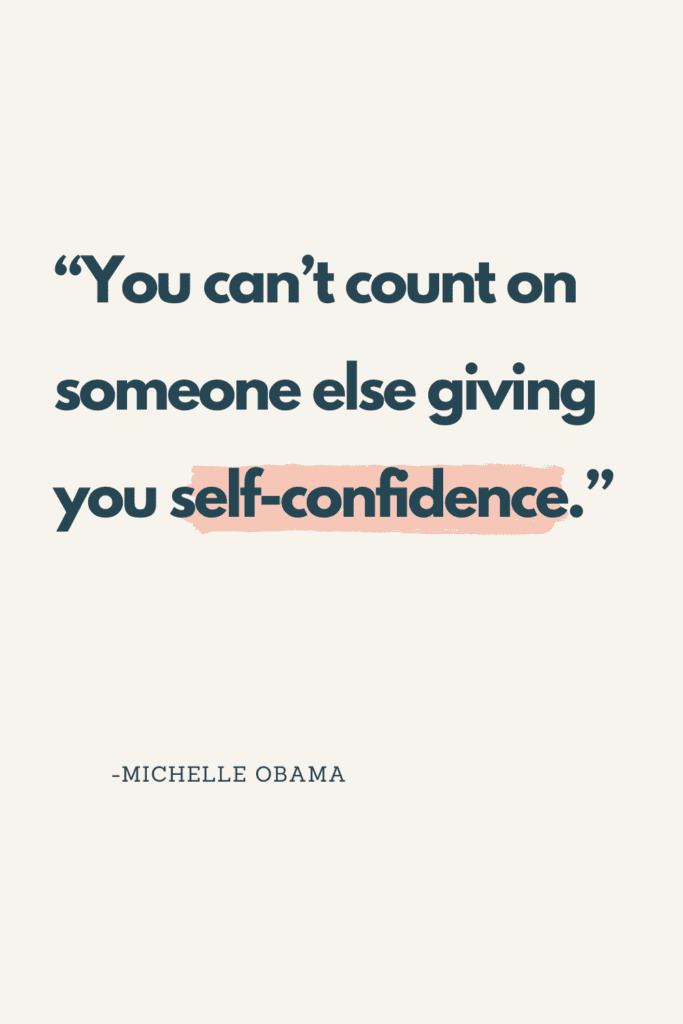
“You can’t count on someone else giving you self-confidence.”
I wrote those lines down the first time I heard them, because they address the exact tension so many high-achieving women carry:
- Wanting to feel confident, but waiting for someone else to make them feel that way.
- Wanting to belong, but measuring their worth through someone else’s eyes.
That tension runs deep. Because for too long, we’ve heard another kind of message: You’re too much. You’re not ready. You don’t belong here.
And when you hear that often enough, it starts to sound like truth—even when evidence suggests otherwise.
What Causes Imposter Syndrome and Why It Feels So Personal
Imposter syndrome doesn’t mean you’re not qualified. It usually means you’ve internalized the idea that you don’t belong.
Even when we have the title, the experience, the seat at the table—the self-doubt still creeps in. You can be sitting in the exact room you worked hard to be in and still hear that whisper: Are you sure you belong here?
Sometimes, all it takes is a look. A pause. A meeting where you’re the only one who looks like you.
I’ve been there.
When I was the youngest leader in the room, I hid my age. When I was the only woman, I masked my femininity. And when everyone around me came from private high schools and legacy connections, I kept quiet about my roots.
That old feeling—the one that asks, “What am I doing here?”—isn’t about ability. It’s about belonging. And it runs deep.
Imposter syndrome doesn’t always stay. It comes and goes—often sneaking in at the edge of something new, important, or visible. Just when you think you’ve outgrown it, it shape-shifts and shows up again.
Tina Fey once joked:
“The beauty of the imposter syndrome is you vacillate between extreme egomania and a complete feeling of: ‘I’m a fraud! Oh God, they’re on to me! I’m a fraud!’”
Even women at the top—ones we admire, quote, and look up to—wrestle with belonging.
And here’s something worth sitting with: belonging can be given, but it can also be self-created. I recently read the book Belonging: The Science of Creating Connection and Bridging Divides by Geoffrey L. Cohen. In it, Cohen referenced studies showing just how much our sense of belonging is shaped from the inside out. Yes, quite often belonging is withheld. But just as often, we withhold it from ourselves—waiting for someone else to tell us we’re allowed in.
How to Build Confidence and Belonging When You Feel Like a Fraud
Here’s one way to take Michelle Obama’s advice to practice a new message:
1. Notice when you’re outsourcing confidence.
Ask: Am I waiting for someone else to tell me I belong?
2. Say what you wish someone else would say.
Write it down or say it out loud, and if it feels uncomfortable, say it three more times:
“I belong here.”
“I trust my voice.”
“I know what I’m doing.”
3. Use it in the moment you tend to shrink.
Quietly say it to yourself right before you raise your hand, before (or after) you send the email, or as you’re walking into a room you’re nervous to be in.
Imposter Syndrome Is More Common Than You Think
The CUT compiled a list of 25 quotes from famous women on imposter syndrome and self-doubt. If that many brilliant, accomplished women are wrestling with the same doubts, then imposter syndrome isn’t personal—it’s cultural. And knowing that doesn’t fix it, but it’s a good reminder: you’re not alone in this feeling. And you never were.
If this landed somewhere true for you – let’s connect.
I write more personal stories about my journey with self-trust, confidence and authenticity over on my Substack, Dear Olivia. Subscribe here.
Ready to take this work deeper?
If you’re navigating a transition, wrestling with imposter syndrome, or craving clarity in your next chapter, I offer coaching for high-achieving women who are ready to redefine success on their own terms. Learn more about me here or book a free clarity call to explore what that could look like for you.

We'll never share your email, and you can unsubscribe anytime.
You'll get the free guide—and a few follow-up emails to help you apply it. You’ll also receive my newsletter with coaching tips, reflections, and new resources. Unsubscribe anytime.